Youth OrchestraOctober 15, 2026· 乐团场记
Idyllic Symphony Youth Public Welfare Orchestra · Rehearsal Documentary: The Best Students Bring Their Classmates Along
Idyllic Symphony Youth Public Welfare Orchestra · Rehearsal Journal
The Best Student Brought His Classmates Along
October 14, 2026 · Huilongguan Jinyu International
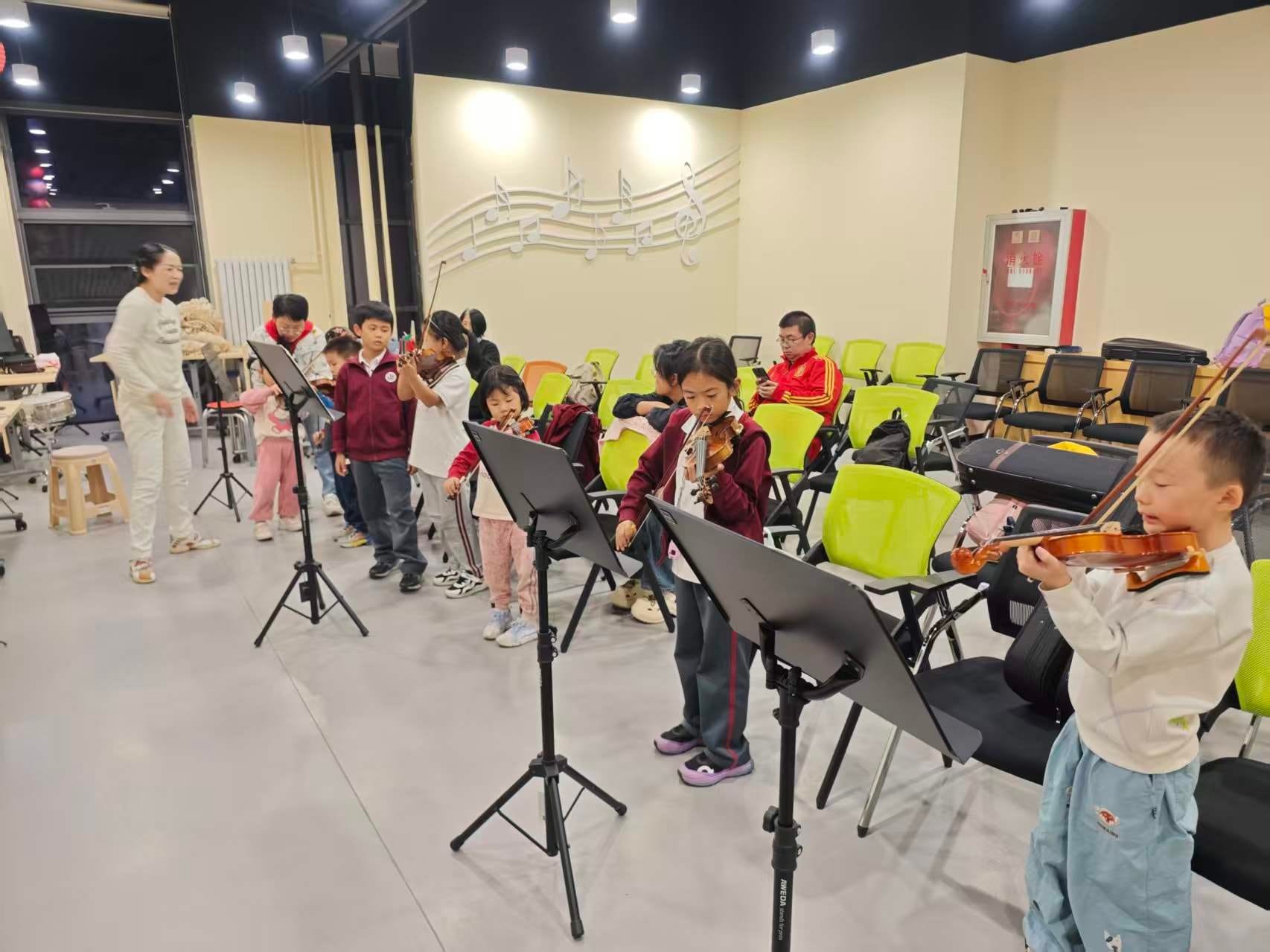
After the National Day holiday, the violin class of the Jinyu International B Group of the Idyllic Symphony Youth Public Welfare Orchestra welcomed a few new faces. Not many, but quite special—because these new students were brought by the child who plays the best in the class.
 · · ·
Teacher Song Binbin's Class
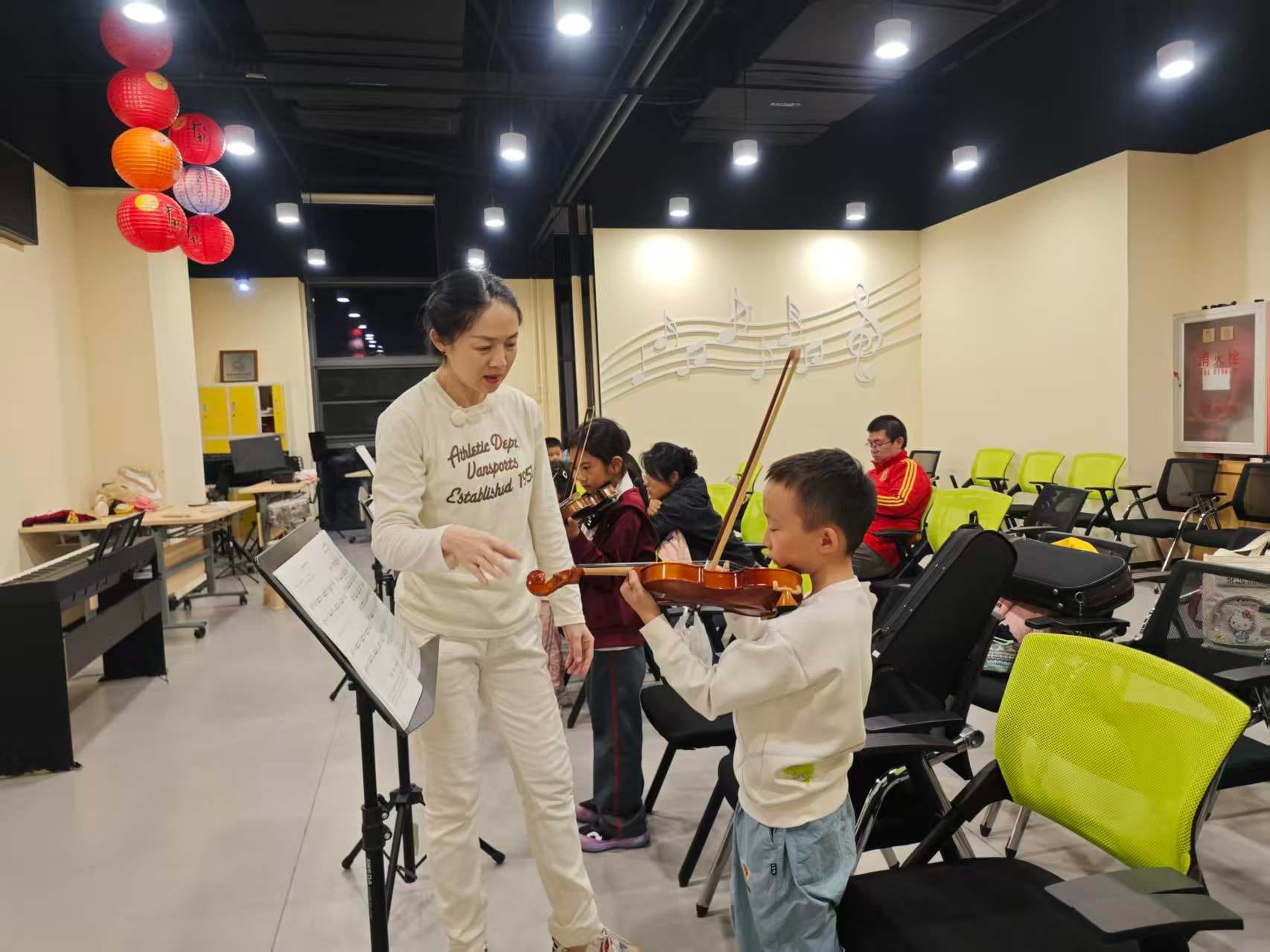
The instructor for this class was Ms. Song Binbin. As always, Ms. Song was as conscientious as ever—the angle of holding the bow, the tension of the wrist, the accent of the beat—she went through each child one by one, not letting any detail slip.
But one phenomenon was obvious: the children seemed especially responsive to Ms. Song's approach. The unique warmth of a female musician made the classroom atmosphere noticeably more relaxed and engaged than when other teachers led the class. The children weren't afraid of her, but they were more willing to listen to her.
This is perhaps a simple truth in teaching: a teacher whom children are willing to feel close to often teaches better than the one who "teaches best." Because when it comes to children learning an instrument, what fundamentally matters is not the efficiency of knowledge transfer, but whether they're willing to come to each class and, once there, willing to play.
· · ·
"Let Me Teach You"
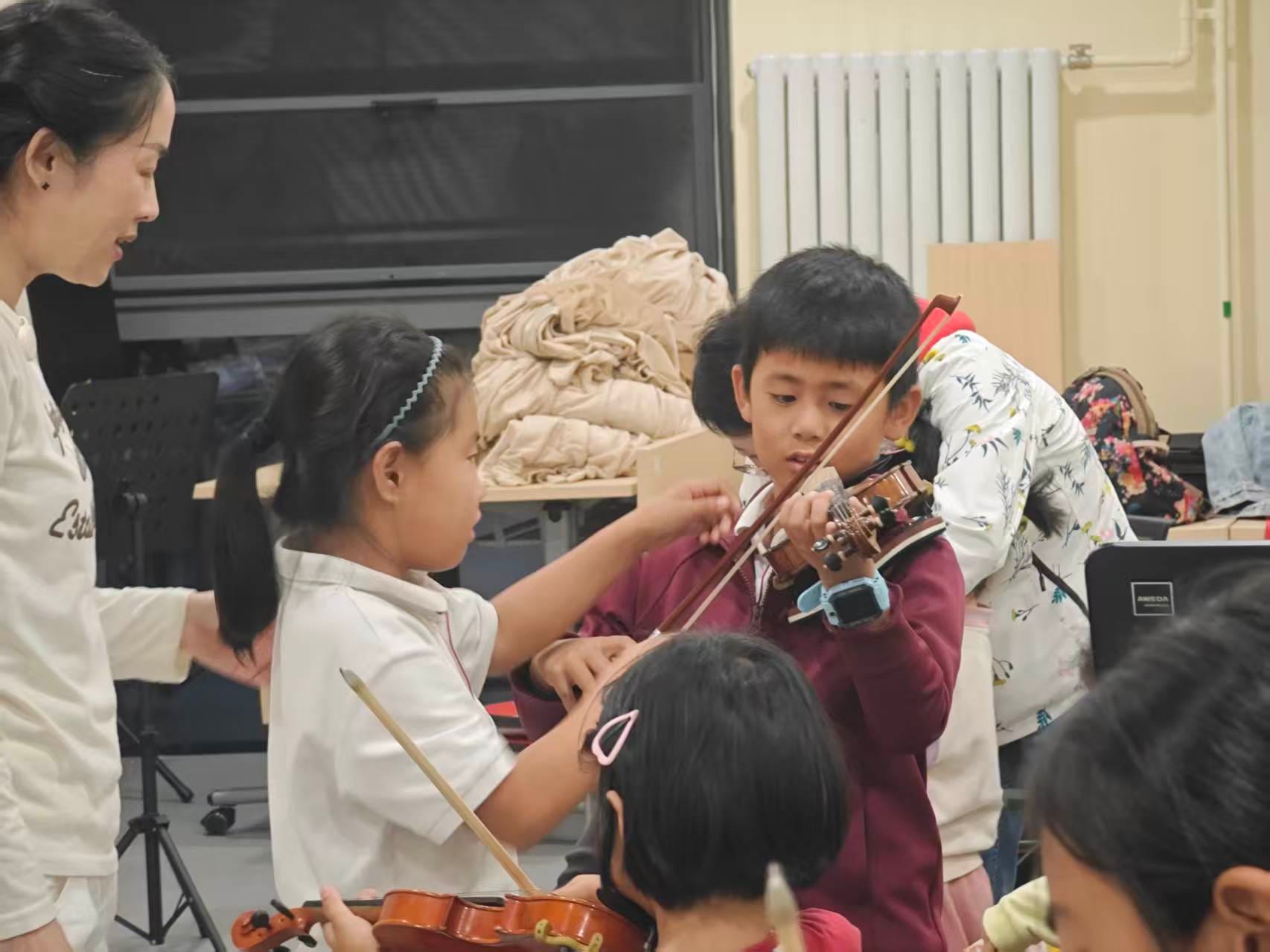
In this class, an interesting scene appeared: the child who plays the best in the class brought his own classmate along.
Not only did he bring him, but he also taught on the spot in class, guiding his classmate hand by hand on how to play. How to hold the bow, where to place the fingers, which note is at which position—he explained it all with great fluency, every bit the little teacher.
This may look like a small interlude in class, but in music education, it is actually a widely proven teaching method.
Teacher Hao Li—teaching director of Idyllic Symphony, former solo violinist of the Central Philharmonic Orchestra, who lived and taught in Canada for many years—told us that in Canadian string classes, "students teaching students" is a very common approach. And in many cases, demonstration and correction between peers are more readily accepted by students than direct instruction from a teacher.
The reason is simple: when a teacher speaks, the child listens looking up; when a classmate speaks, the child listens at eye level. From an eye-level perspective, the psychological pressure is much lower, and the confidence of "I can do it too" comes much faster.
And for the child doing the teaching, "teaching" itself is the deepest kind of "learning." To explain a movement clearly, one must first understand it thoroughly and perform it correctly—teaching it once leaves a deeper impression than practicing it ten times.
 · · ·
Twinkle Twinkle, Here We Go
In this class, the Jinyu International B Group also officially began practicing "Twinkle Twinkle Little Star."
Just like the progress at Beiyuan Subdistrict, the children at Jinyu International are also moving step by step from open strings and finger placement toward linking the melody into a complete piece. With Ms. Song's warmth as a foundation and the "little teacher" helping nearby, the few new children settled in very quickly.
Perhaps by New Year's Day, the young musicians of Jinyu International will also be able to stand on stage, like the children of Beiyuan, and play "Twinkle Twinkle Little Star."
Idyllic Symphony Youth Public Welfare Orchestra
Huilongguan Jinyu International Teaching Site
October 15, 2026
Idyllic Symphony Youth Public Welfare Orchestra · Let Good Music Enter Every Home
· · ·
Teacher Song Binbin's Class
The instructor for this class was Ms. Song Binbin. As always, Ms. Song was as conscientious as ever—the angle of holding the bow, the tension of the wrist, the accent of the beat—she went through each child one by one, not letting any detail slip.
But one phenomenon was obvious: the children seemed especially responsive to Ms. Song's approach. The unique warmth of a female musician made the classroom atmosphere noticeably more relaxed and engaged than when other teachers led the class. The children weren't afraid of her, but they were more willing to listen to her.
This is perhaps a simple truth in teaching: a teacher whom children are willing to feel close to often teaches better than the one who "teaches best." Because when it comes to children learning an instrument, what fundamentally matters is not the efficiency of knowledge transfer, but whether they're willing to come to each class and, once there, willing to play.
· · ·
"Let Me Teach You"
In this class, an interesting scene appeared: the child who plays the best in the class brought his own classmate along.
Not only did he bring him, but he also taught on the spot in class, guiding his classmate hand by hand on how to play. How to hold the bow, where to place the fingers, which note is at which position—he explained it all with great fluency, every bit the little teacher.
This may look like a small interlude in class, but in music education, it is actually a widely proven teaching method.
Teacher Hao Li—teaching director of Idyllic Symphony, former solo violinist of the Central Philharmonic Orchestra, who lived and taught in Canada for many years—told us that in Canadian string classes, "students teaching students" is a very common approach. And in many cases, demonstration and correction between peers are more readily accepted by students than direct instruction from a teacher.
The reason is simple: when a teacher speaks, the child listens looking up; when a classmate speaks, the child listens at eye level. From an eye-level perspective, the psychological pressure is much lower, and the confidence of "I can do it too" comes much faster.
And for the child doing the teaching, "teaching" itself is the deepest kind of "learning." To explain a movement clearly, one must first understand it thoroughly and perform it correctly—teaching it once leaves a deeper impression than practicing it ten times.
· · ·
Twinkle Twinkle, Here We Go
In this class, the Jinyu International B Group also officially began practicing "Twinkle Twinkle Little Star."
Just like the progress at Beiyuan Subdistrict, the children at Jinyu International are also moving step by step from open strings and finger placement toward linking the melody into a complete piece. With Ms. Song's warmth as a foundation and the "little teacher" helping nearby, the few new children settled in very quickly.
Perhaps by New Year's Day, the young musicians of Jinyu International will also be able to stand on stage, like the children of Beiyuan, and play "Twinkle Twinkle Little Star."
Idyllic Symphony Youth Public Welfare Orchestra
Huilongguan Jinyu International Teaching Site
October 15, 2026
Idyllic Symphony Youth Public Welfare Orchestra · Let Good Music Enter Every Home